In this section, we focus on pedagogical planning, evaluation and documentation in early childhood education.
Systematic and goal-oriented planning and evaluation create a solid base for high-quality ECEC and form a circular, repeated pedagogical process.
The main aim of the evaluation is to monitor and develop the quality of ECEC.
High-quality ECEC supports children’s holistic learning, development and well-being in the best possible way.
Evaluation takes place on multiple levels and through different methods, both externally and internally.
Documentation is the key tool for implementing planning and evaluation in daily activities in ECEC.
Introduction
The quality of early childhood education is ensured through systematic planning, which responds to the requirements set by national legislation and curriculum and the individual needs of each child. To ensure that pedagogy in early childhood education meets these criteria, a comprehensive evaluation must be carried out. Evaluation is a multilevel process conducted in collaboration by external and internal parties and on multiple levels of ECEC. Based on the information received through evaluation, the pedagogy of early childhood education is developed to reach an ever-higher level of quality. This forms a continuous process, where planning, implementation of pedagogy, evaluation and development follow each other supported by ongoing documentation.
Quality in ECEC
To provide high-quality early childhood education, one must understand what quality is. Quality in early childhood education is a multidimensional and complex concept. In its simplest form, quality describes activities and factors that jointly lead to implementing early childhood education that is optimal for children’s holistic well-being, learning and development, taking into account each child’s individual needs (OECD, 2021). However, quality and its interpretation are never that simple, as they are always related to a broader cultural context. According to UNESCO (2015), quality should be based on research data on previously mentioned children’s holistic well-being, learning and development, but it should also reflect the values and traditions of local culture.
This is why quality does not look the same everywhere but has the same basis and principles. For example, shared values that lead to the implementation of ECEC across countries also reflect principles against which the quality in ECEC should be developed (Sylva et al., 2014):
Holistic pedagogical philosophy
Child-centredness
The child as a unique human being
Inclusion and equality
To support the conceptualisation of quality, the Finnish National Education Evaluation Centre (FINEEC: Vlasov et al., 2019) has presented national indicators of ECEC quality in Finland, which have also been identified as the basic principles of ECEC quality globally (OECD, 2018). FINEEC (Vlasov et al., 2019) divides ECEC quality indicators into two categories: structural factors and process-related factors. Structural factors of quality reflect the statutory quality regulations and frameworks set for early childhood education, such as the use of curriculum, the size of child groups, teacher training and leadership (Slot et al., 2015). The process factors, on the other hand, tend to describe aspects that are tangible to the child and present to them in day-to-day life in ECEC, such as the interaction between the adult, child and parents, pedagogical activities and learning environments (Slot et al., 2015).
However, these quality factors cannot be considered completely separate from each other because they are bidirectionally connected (Palaiologou, 2023; Vlasov et al., 2019; Whitebread et al., 2015). For example, the size of a group of children and the number of teachers largely influence the kinds of pedagogical activities that can be carried out in the group. At the same time, even the most well-equipped ECEC centre cannot produce high-quality pedagogy without professionals who can implement the curriculum in practice and demonstrate good child-centred pedagogy. Thus, quality should always be considered holistically and situationally, taking into account both scientific and cultural meanings.
The following description of the current-state-of-affairs in Zambia describes well how ECEC quality comprises both structural and process quality characteristics:
The Standards and Evaluation Guidelines (Ministry of Education, Science, Vocational Training and Early Education, 2015) establishes that Early Childhood Education (ECE) in Zambia is a formalized part of the education system, catering to children aged 3 to 6 years through two levels: Nursery (ages 3-4) and Reception (ages 5-6). The curriculum is play-based and focuses on the holistic development of the child, covering physical, social-emotional, language, aesthetic, and cognitive areas. To standardize the quality of ECE provision, the Ministry has developed a national curriculum that is linked to Grade 1, ensuring a smooth transition for learners. The curriculum allocates specific weekly time for learning areas such as Social Studies, Environmental Science, Literacy and Language, and Numeracy, with a significant portion of the school day (60%) dedicated to play.
The guidelines specify detailed infrastructure and resource requirements for ECE centres to ensure a safe and stimulating environment. These include standard-measured buildings with proper ventilation and lighting, age-appropriate toilets with a 1:10 toilet-to-child ratio, and clean, safe water. Playgrounds are deemed essential, requiring safe play parks, sand pits, and age-appropriate play equipment like swings and slides. Furthermore, ECE centres must have simple, age-appropriate furniture (chairs and tables, not desks) and a well-equipped first aid box. The document also mandates key staff qualifications, requiring trained pre-school teachers with a minimum of two years of training, and sets maximum class sizes of 15 learners for ages 3-4 and 20 learners for ages 5-6.
Underpinning these operational standards is a broader commitment to a Child-Friendly Schools (CFS) framework, which seeks to create inclusive, healthy, protective, and effective learning environments. The CFS approach, which Zambia has adopted to improve the overall quality of education, emphasizes the rights of the child and addresses barriers to learning. This framework ensures that ECE standards are not just about infrastructure and curriculum (i.e. structural characteristics of quality), but also about fostering a supportive and safe space where children can thrive (i.e. process characteristics of quality). The document highlights that adherence to these minimum standards is the starting point for quality education, with the goal of progressively improving and going beyond these benchmarks to realize each child’s full potential.
Planning is the first step towards building high-quality ECEC. Pedagogical planning happens at different levels of ECEC, not only in ECEC classrooms, but also more broadly in the centre and at the ECEC organiser level (e.g. Rintakorpi, 2016; Rutar et al., 2022). Multidimensional planning makes ECEC purposeful, uniform and focused. At the heart of ECEC, the level of ECEC classrooms, planning is the starting point for the implementation of pedagogy (e.g. Rutar et al., 2022). It is based on children’s needs in the classroom and is reflected against national curriculum goals and contents (Vlasov et al., 2019). This fundamental pedagogical planning provides continuity, consistency and the possibility to respond to children’s needs suitably through pedagogical decisions and choices. With clear planning, everyone knows what is being done, why and how, and the kinds of goals and objectives everyone is working towards. As a result, the objectives set for the pedagogy are systematically approached at every level of ECEC and the actions of the educators are consistent and reasonable. This ensures the quality of ECEC and supports children’s learning, development and well-being holistically.
Evaluation in ECEC
Basics of evaluation
Planning and evaluation are highly intertwined processes. The pedagogical activities should always be based on careful planning and a set of objectives. To obtain information on whether these objectives are achieved, an evaluation must be carried out (Vlasov et al., 2019). Evaluation refers to the acquisition of information about a particular issue and its critical interpretation. In early childhood education, this is a multidimensional process that steers the pedagogical planning and implementation of pedagogy. This evaluation process has two main aims: to monitor and protect every child’s right to receive quality and safe education and to improve the quality of education with a focus on the future (Sheridan, 2000; Vlasov et al., 2019). According to Vanderbroeck et al. (2013), the quality of ECEC services varies widely within countries and between countries, districts and ECEC units, which unfortunately is not in line with the previously noted principles of ECEC, but also entails that planning and evaluation need to be improved at several levels of the ECEC system. To achieve the objectives set for ECEC, a continuous, critical and development-oriented evaluation of the implemented ECEC is required. At best, evaluation provides important information for stakeholders and policy makers to develop early childhood education towards higher quality and accessibility for every child (European Commission, 2014a).
When considering the evaluation of early childhood education, it should be noted that for ECEC in general, the levels, methods and practical implementation of the evaluation also differ between countries, districts and ECEC units (e.g. European Commission, 2014; Resa et al., 2016) Therefore, this text presents general, universally relevant observations related to the evaluation of the quality of early childhood education and its development.
Levels of evaluation
In order to produce comprehensive evaluation, the quality of early childhood education is assessed at different levels, such as national, local, unit and pedagogical activity levels (Vlasov et al., 2019). Together, the assessment carried out at these levels provides comprehensive and accumulative information on the state of quality in ECEC.
Evaluation at the national level is intended to monitor the consistency of the quality produced by the various ECEC providers (European Commission, 2018). This national evaluation data is used in national, local and unit-level development work as well as in international comparisons and development of regional evaluation policies, for example, across Nordic regions.
Local evaluation, on the other hand, refers to an assessment of the quality of early childhood education in a specific region, such as municipality or county and typically as a joint endeavour between local administrators and several ECEC centres, the quality of which is also examined on a unit-by-unit basis.
Finally, the most specific evaluation happens at the level of pedagogical activities, at the heart of ECEC: in the ECEC classrooms. In ECEC classrooms, evaluation can focus on several aspects, among which the development of the child is the most common. Evaluation of the child assists in identifying the needs of individual children, which further accommodates teaching and facilitation of learning. Evaluation also takes place at the level of the classroom, where the focus shifts from individual children to the pedagogy and practices conducted in the classroom. The following examples entail descriptions of how child development and learning are evaluated in African countries.
The Tanzania National Curriculum for Primary Education, Grades I–VI of 2023, explains the following types of ECEC assessments:
Early assessment
This type of assessment is conducted immediately after a pupil enrols in school before teaching and learning in Grade I commence. This assessment aims to determine a child’s level of understanding. The purpose is to enable a teacher to identify the specific learning needs of each learner so that appropriate interventions can be provided during the teaching and learning process. Teachers use the information obtained from the assessment to prepare instructional plans that help learners develop their intended competencies. Teachers can use the results of this assessment as a baseline for monitoring learners’ progress by comparing them with the results of subsequent assessments of the same type after a period of teaching and learning. Schools are required to establish procedures for assessing learners before the commencement of teaching and learning in Grade I.
Diagnostic assessment
Diagnostic assessment is part of continuous assessment and enables the teacher to identify learners’ diverse needs and provide appropriate interventions. This type of assessment is conducted to help the teacher obtain information about a learner’s ability to demonstrate proficiency in various skills. The assessment results are used to provide appropriate guidance and interventions for learners experiencing specific learning barriers. To ensure the effectiveness of this assessment, the involvement of health professionals may be required, particularly for learners with special educational needs.
Summative assessment
Summative assessment is conducted at the end of each school term. With regard to ECEC, this assessment includes a national assessment administered at the end of Grade II to determine whether learners have attained the expected competencies required to progress to the next grade. A national assessment is conducted to ensure the consistency and reliability of internal assessments. Furthermore, this assessment is not used as a screening mechanism; rather, it helps identify learners’ learning gaps so that appropriate support can be provided before they advance to the next grade. The National Examinations Council of Tanzania is responsible for administering this assessment. This assessment comprises 70% of the overall assessment score.
External and internal evaluations
Evaluations at different levels can be carried out externally and internally using different methods and instruments. External evaluation refers to an assessment carried out by an outside party of an early childhood education centre (Resa et al., 2016; Sheridan, 2000; Wong & Li, 2010). In this case, it is often a continuum of assessment, where education is regularly observed and evaluated. This assessment usually refers to the previously discussed national or local assessment carried out by the authority, but evaluation also commonly takes place at the level of centres and classrooms, depending on the evaluation systems in different countries or regions. The broader aim of these check-ups is to provide objective observations on quality and determine whether ECEC is carried out in accordance with current laws, regulations and guidelines (European Commission, 2014a; Resa et al., 2016; Wong & Li, 2010). This provides follow-up information and feedback to evaluation agencies, early childhood education organisers, pedagogy implementers and teachers and is used to support quality development work (Wong & Li, 2010). Therefore, external evaluation can also act as a catalyst for internal evaluation. To achieve the most reliable and comprehensive assessment information, these forms of assessment must be combined (Sheridan, 2000; Vlasov et al., 2019).
Internal assessment, on the other hand, most typically refers to an assessment from within an early childhood education unit or organiser, which often takes the form of a self-assessment (European Commission, 2014a; Resa et al., 2016; Wong & Li, 2010). In this case, the staff reflect on the quality of the early childhood education they have carried out. When conducting a self-assessment, the key is to have the skill to implement critical reflection (Sheridan, 2001). This refers to the ability to observe things from different perspectives, challenge one’s own views and seek alternative solutions. When conducting internal assessments, in addition to self-assessment, it is useful to have reflective discussions with other professionals and colleagues (Sheridan, 2001). In this case, one can gain insights and find new perspectives and solutions to different situations. If possible, it would also be fruitful to ask a colleague to observe the teaching and report on their observations on the basis of which professional discussions would be conducted.
In addition to external and internal assessments, valuable information is also provided by children and other stakeholders involved in ECEC, such as families (European Commission, 2014a; Taguma & Litjens, 2013). Gathering this information from children and their families requires participatory assessment procedures. An effective way to involve children in the evaluation process is to conduct daily observation and continuously collect different documentation, such as children’s portfolios and interviews (Taguma & Litjens, 2013). This provides important information about a child’s learning and current well-being, including the child’s own voice to be heard and seen. In addition to children, the involvement of parents in the evaluation process has positive effects on both sides (European Commission, 2014a; OECD, 2025). Participating parents in evaluation work can happen through daily dialogues between staff and parents or through having them complete questionnaires. In addition to gathering evaluation-related information, sharing perspectives, opinions and experiences enhances parental engagement and provides valuable information about families’ lives outside of early childhood education, which is further utilised in quality development work (European Commission, 2014a).
The focus of evaluation
The subject of the evaluation controls what kinds of data are obtained and how they can be utilised. Therefore, the evaluation of quality starts by making choices about what one wants to have information about at a certain time and in the given context (Vlasov et al., 2019). It is important to bear in mind that as ECEC quality comprises several characteristics, it is not possible to evaluate everything at one go. Therefore, defining the main focus of evaluation is like turning the spotlight on and directing it to a specific, predetermined topic or focus. The quality of ECEC can be evaluated and developed one area at a time.
Evaluations can be conducted on a number of different issues, such as the earlier presented structural and process-related quality factors. The focus can be, for example, on interaction between children and teachers or the implementation of the curriculum, in pedagogical planning or in the implementation of activities (Vlasov et al., 2019). In addition to these examples of quality factors, evaluations can be carried out by focusing on, observing and assessing a child’s development in some specific skills (Downs & Strand, 2006). For example, the development of a child’s mathematical skills can be considered an indicator of whether the implemented pedagogy has met the child’s learning needs and thus has been of high quality. This reveals the successes as well as the issues to develop that should receive more attention when planning pedagogy in the future.
To conduct high-quality evaluation and development work, one has to take systematic steps to focus on the work. It is key that these steps lead in the direction in which evaluation in that context is the most important. Thus, there are different focuses of evaluation and methods of implementation, and none of them is inferior to the others. As previously noted, high-quality evaluation of ECEC follows a systematic plan, is combined by different approaches and methods of evaluation and focuses on the most central issues in that specific context.
Evaluation leads the development of ECEC
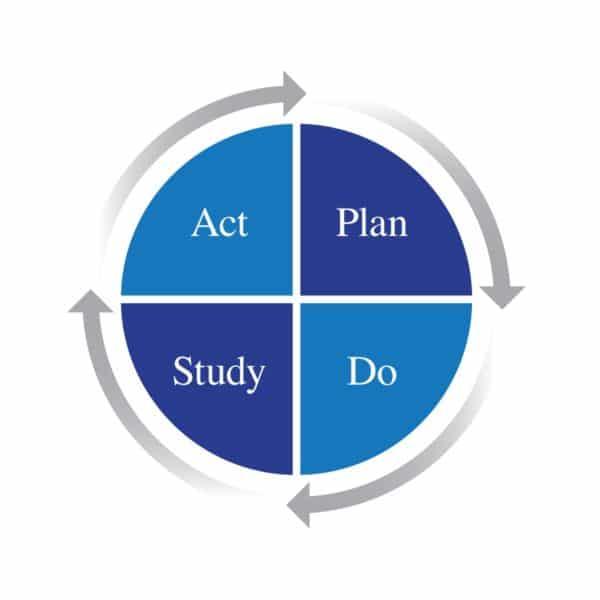
Based on the evaluation information, teachers and other parties are able to make informed decisions regarding future pedagogy (Vlasov et al., 2019). In other words, they are able to assess which policies are worth continuing and which are worth changing to support children’s learning, development and overall well-being in the best ways possible. This leads to evaluation on every level of evaluation: national, local, unit and pedagogical activity level. On the basis of the multilevel evaluation, pedagogy is again planned, which is later again evaluated based on the documentation produced during planning, implementing pedagogy and previous evaluations (Vlasov et al., 2019). As a result, a circular process, ‘The Deming Cycle’ (The Deming Institute, 2026), is formed in which pedagogical planning, implementation of pedagogy, evaluation and development repeatedly follow each other, supported by systematic documentation.
When considering pedagogical planning and evaluation in ECEC, it is also essential to identify what documentation entails and to understand its importance in the ongoing process. Documentation is a critical tool for the planning and evaluation that teachers use (Ukkonen-Mikkola et al., 2022; Vlasov et al., 2019). The idea behind documentation is that it makes the planning, implementation and evaluation of pedagogy visible and allows for these steps to be viewed and utilised in the development of pedagogy (Rintakorpi, 2016). It is also possible to come back to things afterwards to check for more specific facts, and it provides concrete evidence of the pedagogy and agreements made. In addition to teachers, documentation is also useful for other childcare professionals and managers working in ECEC centres as well as for children and their parents. Therefore, documentation is conducted in collaboration, supporting the participation of the closest people in a child’s life (Ukkonen-Mikkola et al., 2022). In addition to these closest stakeholders, other parties, such as health and social care professionals, also participate in the documentation process. Combining information from all these stakeholders working with the child provides comprehensive documentation that can be utilised broadly in early childhood education and, for example, in planning suitable forms of special educational support for individual children.
Documentation in practice
Documentation should be part of everyday work in early childhood education. It can be carried out in a wide variety of ways, such as in written or visual documents(Ukkonen-Mikkola et al., 2022). Teachers may, for example, collect portfolios for children that consist of their art works, crafts, drawings and other concrete samples of the pedagogy implemented. Visual documentation can also be videos and photos taken in ECEC centres. These serve as concrete evidence of pedagogical activity, the child’s handprint and participation in action and reflect the child’s development in numerous skills. These can also be presented in written documents, such as notes and memos, lesson plans, tests and other observations in everyday activities. In addition to visual and written documentation, audio documentation is also an effective way to store information. This can happen, for example, in individual interviews where the teacher asks different questions from the child and lets them answer according to their own opinions. If not teachers, parents can also interview their children or children can interview each other. Such activities can provide different perspectives and would be interesting to hear at the ECEC centre.
The impact of ECEC is being built through constant planning and evaluation
As noted earlier, pedagogical planning, evaluation and documentation steer the pedagogy of early childhood education. The purpose of this ongoing process is to create opportunities to develop the quality of early childhood education to an ever higher level, especially responding to the changing needs of children, their families and society (European Commission, 2014a; OECD, 2025; Vlasov et al., 2019). The significance of developing early childhood education lies in the fact that it has far-reaching effects on children’s own lives as well as society at large (OECD, 2025). With high-quality early childhood education, it is possible to have a positive influence, for example, on academic success and level of education, employment, socio-economic status and overall well-being (e.g. European Commission, 2014b; Hurt & Betancourt, 2017; OECD, 2025). Thus, the effects of early childhood education are not only evident in the present but become visible, especially in the future. In other words, small things grow bigger. For this reason, investing in the quality of early childhood education and its development based on systematic planning and comprehensive evaluation is extremely important and valuable, both for the present and for the future.
References
Downs, A. & Strand, P. (2006). Using Assessment to Improve the Effectiveness of Early Childhood Education. Journal of Child and Family Studies,15, 671-680. DOI:10.1007/s10826-006-9080-7
European Commission. (2014a). Proposal for key principles of a Quality Framework for Early Childhood Education and Care: Report of the Working Group on Early Childhood Education and Care. Brussels: European Commission.
European Commission: Directorate-General for Education, Youth, Sport and Culture & PPMI (Public Policy and Management Institute). (2014b). Study on the effective use of early childhood education and care (ECEC) in preventing early school leaving (ESL) : final report. Publications Office. https://data.europa.eu/doi/10.2766/81384.
European Commission. (2018). Proposal for a Council recommendation on high quality early childhood education and care systems (COM(2018) 271 final). EUR-Lex. EUR-Lex document
Hurt, H., & Betancourt, L. M. (2017). Turning 1 Year of Age in a Low Socioeconomic Environment: A Portrait of Disadvantage. Journal of developmental and behavioral pediatrics : JDBP, 38(7), 493–500. https://doi.org/10.1097/DBP.0000000000000469
Ministry of Education, Science, Vocational Training and Early Education. (2015). Standards and evaluation guidelines. Directorate of Standards and Curriculum.
OECD. (2021). Glossary of key terms. In Starting Strong: Mapping quality in early childhood education and care. OECD.
OECD (2025), Quality Early Childhood Education: The Key to Prosperity and Well-Being, International Summit on the Teaching Profession, OECD Publishing, Paris. https://doi.org/10.1787/cd5ca149-en.
OECD (2018), Engaging Young Children: Lessons from Research about Quality in Early Childhood Education and Care, Starting Strong, OECD Publishing, Paris. https://doi.org/10.1787/9789264085145-en.
Palaiologou, I. (2023). Early childhood provision, practice and quality: the ambiguity of the meaning of quality. International Journal of Early Years Education, 31(4), 839–843. https://doi.org/10.1080/09669760.2023.2275413
Resa, E., Ereky-Stevens, K., Wieduwilt, N., Penderi, E., Anders, Y., Petrogiannis, K. & Melhuish, E. (2016). Curriculum Quality Analysis and Impact Review of European Early Childhood Education and Care (ECEC).
Rintakorpi, K. (2016). Documenting with early childhood education teachers: pedagogical documentation as a tool for developing early childhood pedagogy and practises. Early Years, 36(4), 399–412. https://doi.org/10.1080/09575146.2016.1145628
Rutar, S., Ukkonen-Mikkola, T., Štemberger, T., & Konrad, S. Č. (2022). Practices of Planning as a Reflection of Teaching and Learning Concepts in ECEC: The Cases of Finland and Slovenia. In Finnish Early Childhood Education and Care: A Multi-theoretical perspective on research and practice. Springer International Publishing, 209–225.
Sheridan, S. (2000). A Comparison of External and Self‐evaluations of Quality in Early Childhood Education. Early Child Development and Care, 164(1), 63–78. https://doi.org/10.1080/0300443001640106
Sheridan, S. (2001). Quality Evaluation and Quality Enhancement in Preschool: A Model of Competence Development. Early Child Development and Care, 166(1), 7–27. https://doi.org/10.1080/0300443011660102
Slot, P. L., Lerkkanen, M.-K., & Leseman, P. P. M. (2015). The relations between structural quality and process quality in European early childhood education and care provisions: secondary analyses of large scale studies in five countries. CARE: Curriculum & Quality Analysis and Impact Review of European Early Childhood Education and Care, Utrecht University.
Sylva, K., Ereky-Stevens, K & Aricescu, A-M. (2014). Overview of European ECEC curricula and curriculum template. CARE Curriculum quality analysis and impact review of European ECEC.
Taguma, M. & Litjens, I. (2013) Literature Review on Monitoring Quality in Early Childhood Education and Care (ECEC). OECD Network on Early Childhood Education and Care: Directorate for Education and Skills.
The Deming Institute. (2026, June 11). The PDSA Cycle (Plan-Do-Study-Act). https://deming.org/explore/pdsa/
Ukkonen-Mikkola, T., Kangas, J., Manning, M., Garvis, S., & Harju-Luukkainen, H. (2022). The Importance of Evaluating Early Childhood Education Quality to Support the Learning of Young Children.
UNESCO. (2015). Education for All 2000-2015: Achievements and Challenges. Paris: UNESCO.
Vandenbroeck, M., Lazzari, A., Van Lancker, W. & Willems, S. (2013). Accessibility of Early Childhood Education and Care (ECEC) for children from ethnic minority and low-income families. Transatlantic forum on inclusive early years.
Vlasov, J., Salminen, J., Repo, L., Karila, K., Kinnunen, S., Mattila, V., Nukarinen, T., Parrila, S., & Sulonen, H. (2019). Guidelines and recommendations for evaluating the quality of early childhood education and care. Finnish Education Evaluation Centre.
Whitebread, D., Kuvalja, M. & O’connor, A. (2015). Quality in Early Childhood Education: an International Review and Guide for Policy Makers. Qatar Foundation.
Wong, M. N. C., & Li, H. (2010). From External Inspection to Self-Evaluation: A Study of Quality Assurance in Hong Kong Kindergartens. Early Education and Development, 21(2), 205–233. https://doi.org/10.1080/10409281003638725