Learning mathematical skills

  • Early maths skills

    Early math skills refer to the foundational mathematical abilities developed in early childhood, encompassing numeracy skills and broader domains including logical reasoning, recognition of patterns and regularities, spatial and geometric understanding, measurement, problem-solving and mathematical language use.
  • Basic maths skills

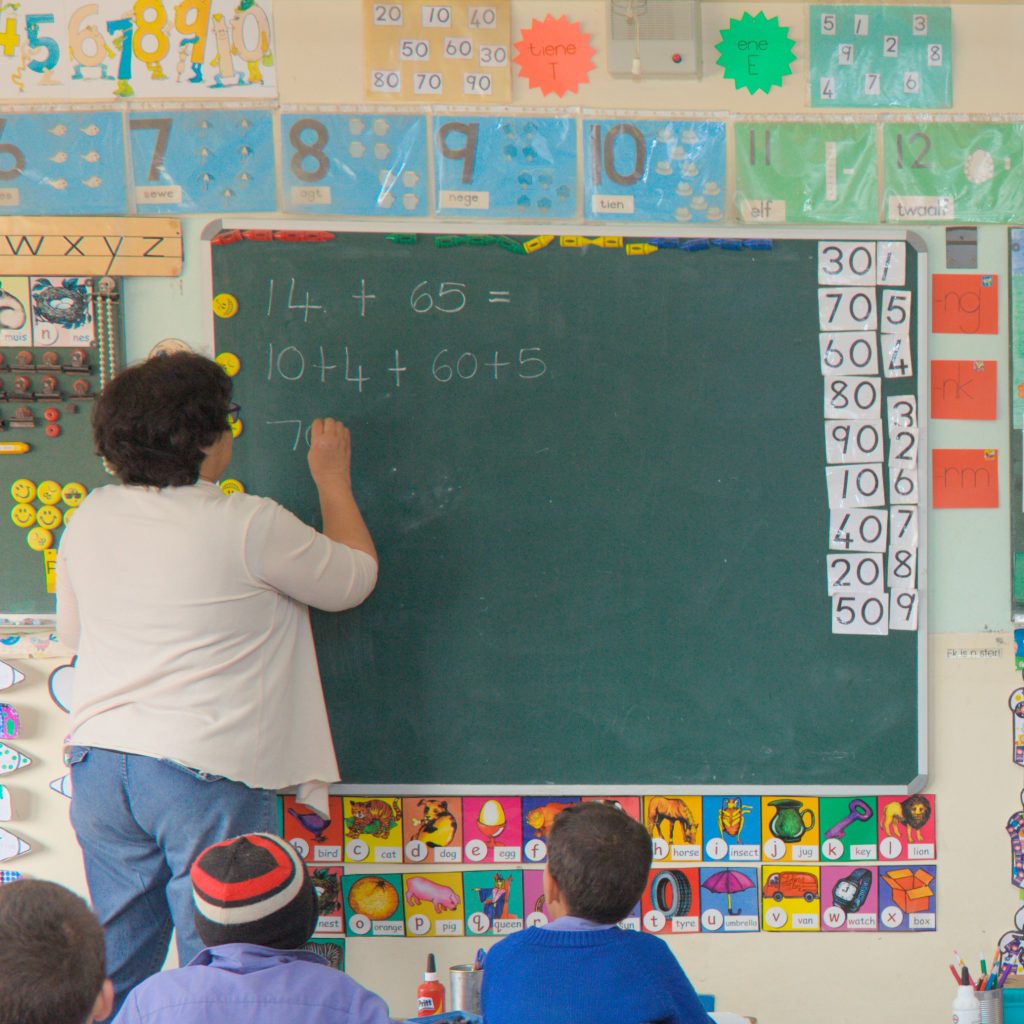
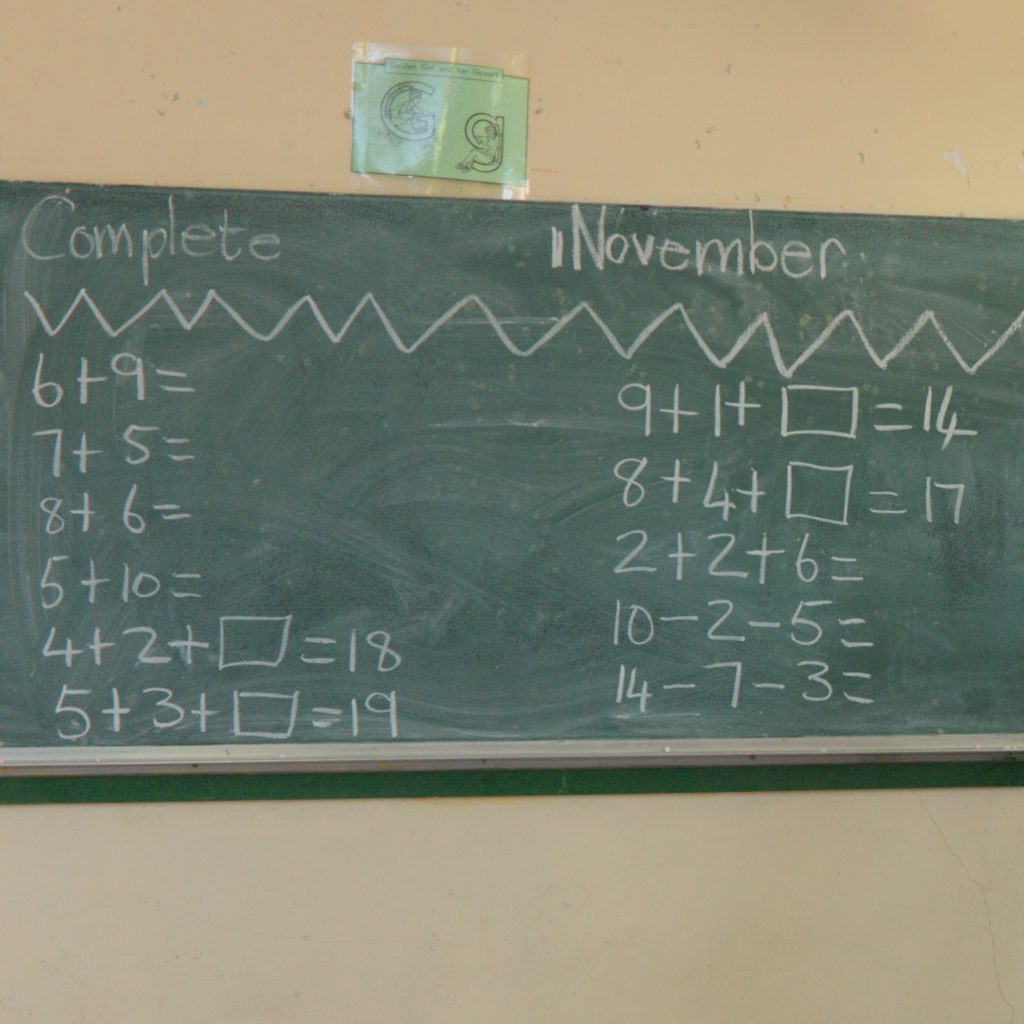
    Basic math skills are the foundation for more advanced mathematical abilities and everyday problem-solving. They include basic operations, such as addition, subtraction, multiplication and division, and key concepts, such as number knowledge and basic geometry.
  • Advanced and applied maths skills

    Knowledge of the number system and the ability to work with whole numbers using various arithmetic operations form an essential foundation on which further mathematical skills are built. However, this alone is not enough even for everyday problem-solving. Therefore, the understanding of the number system must extend to rational numbers, such as fractions, and be applied to different contexts, such as measurement, along with arithmetic skills.

  • Problem solving

    Problem‑solving refers to the ability to handle nonroutine problems for which no ready‑made solution strategy is available, requiring the learner to adapt or invent new strategies to reach a solution.
  • Maths language

    Math language refers to the vocabulary, concepts and linguistic structures that children use to understand, express and reason about mathematical ideas.
  • Individual and enviromental factors related to maths development

    The development of mathematical skills is influenced by a complex interplay of emotional, cognitive, motivational and environmental factors. A supportive and well-designed learning environment—across early childhood settings, in school and at home—plays a crucial role in shaping children’s learning and development.
  • Maths on the brain

    Math skills are developed through practice, patience and the right support. When students practise math, they strengthen the neural pathways that help them understand numbers and use problem-solving techniques.