
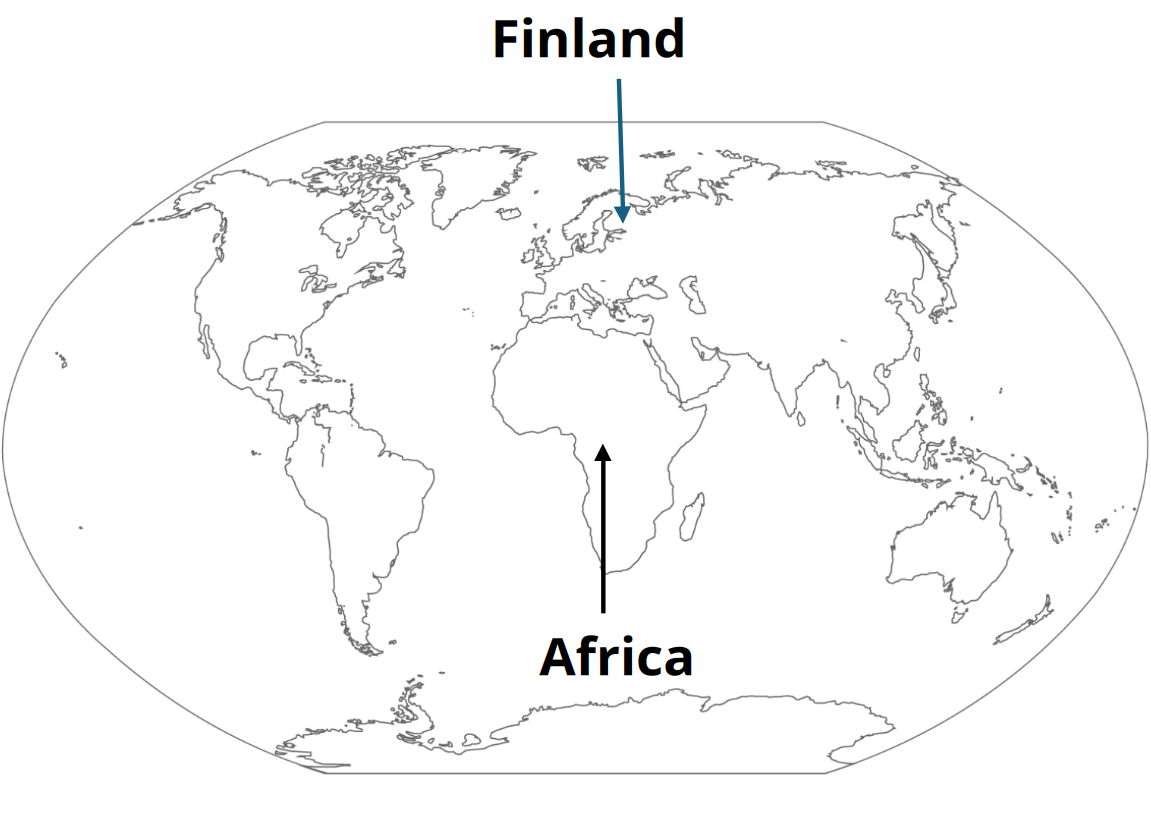
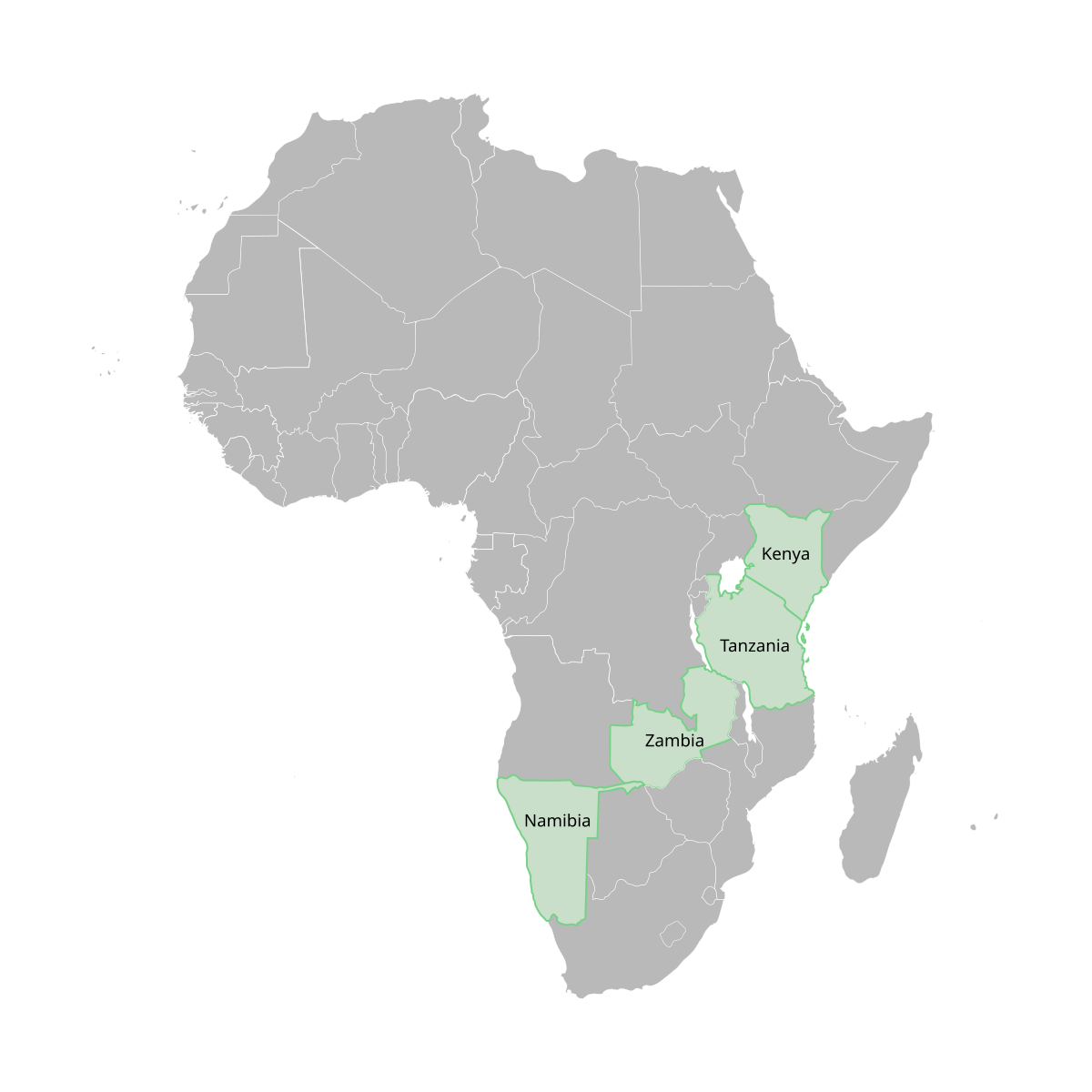
Read more about what is happening across Africa and in Finland.
It’s a busy weekday morning for the family. It’s still frosty outside, but according to the weather forecast, it should reach 10 degrees during the day. Dad is thinking about how long it will take him to drive to work. Mother is thinking about how to dress Liisa for daycare.
They forgot to buy bread the day before, so there are only three rolls left for breakfast. ‘Half a roll each’ is third-grader Jussi’s suggestion for the family of six. Porridge is also made, for which the recipe’s serving size for four people is adapted for six people.
‘What’s the time?’ Hanna gasps hurriedly. ‘Do we have time to brush our teeth, or should we go with xylitol again today?’
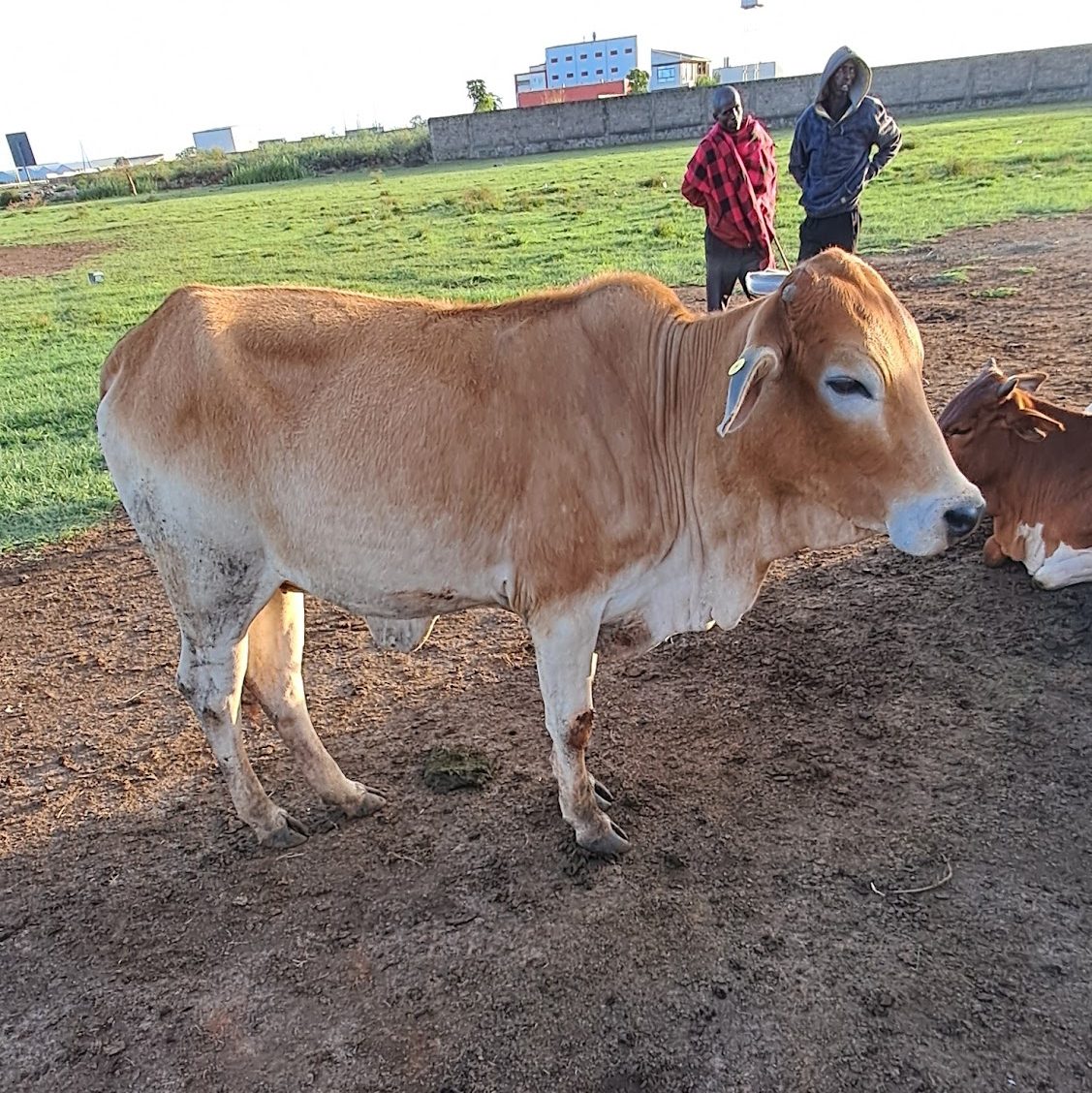
In the predawn quiet of a Maasai homestead, 15 meters from a house, stood a rectangular cowshed, measuring approximately 20 meters in length and 10 meters in width. Olomayiana, aged 60, and Leshinka, his eldest son, aged 20, counted their cows, noting 67 cows out of a total of 71. Their observation revealed the absence of four cows from the usual herd.
Immediately, Olomayiana sent Leshinka to accompany his uncle ole Tiepa to search for the missing cows. The duo hurriedly left to look for the four missing animals, which they found and brought back to the cowshed. All 71 animals were together.
At 6:30 a.m., Olomayiana’s wife Naramat and his younger son, Saitoti, joined them at the entrance of the cowshed. Saitoti positioned himself at the door of cows’ enclosure and released the cows at intervals of 8 to 12 minutes to match the time it took Naramat to milk a cow, each of which yielded an average of 3 litres. By 7:20 a.m., the dairy man would come for 10 litres of milk, which he bought every day for KSh 0.60 per litre.
Oops! The sun was already peeping over the horizon. Saitoti quickly drank two cups of milk and grabbed his school bag. He ran all the way to school just in time for the morning assembly.

In a small village by a river in Namibia lives Meme Penehafo, a fisherwoman. Every morning, she goes out to the river in her canoe. She finds the best spots to fish using her nets. When Meme Penehafo returns, her basket is full of fish. With Twapewa’s help, they weigh the fish and sell them for N$25 per kilogram at the market. If Meme Penehafo catches 20 kilograms of fish, how much money will she earn if she sells all of it at N$25 per kilogram? Twapewa sometimes gives change to her customers. If a customer buys 6 kilograms of fish and pays with a N$200 note, how much change does Twapewa need to give back?


The villagers are also skilled at weaving baskets. They carefully measure the length of the weaving material (eembale, or palm leaves), ensuring each basket is symmetrical and precise in its patterns. If a basket requires 3 meters of palm leaves to be woven, how many meters are needed to weave 5 baskets?

Some villagers also make clay pots using eloya (clay soil). They consider the amount of clay needed in grams or kilograms and the time it takes to bake the pots in the fire. If it takes 2 hours to bake one pot, how long will it take to bake eight clay pots if they are baked one at a time?

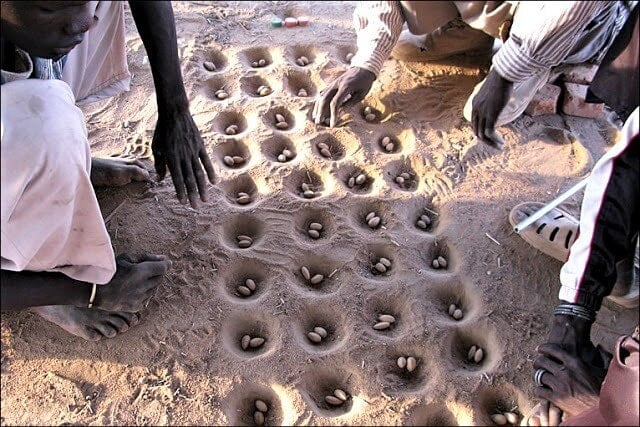
The villagers love playing owela, a fun board game in which they have to plan their moves for them to win. If 3 villagers play owela every evening for a week, how many games do they play in total?
Once upon a time, on the Ukerewe island, which has 27 small isles, there was an isle called Kweru, which was famous for its fishing activities. On that island lived a fisherman named Mbuluga. Mbuluga had five canoes with fishing nets. If one canoe took five nets, how many nets did Mbuluga have in total?
Mbuluga had a son called Cheke. Mbuluga spent most of his time fishing and liked to take Cheke with him wherever he went. They did this every evening after Cheke returned from school.
Mbuluga had no maths skills, so Cheke helped him most of the time. When Cheke became used to fishing, he was required to wake up early every day, go to the lake and collect sales information for his father’s five canoes. Assume each canoe sold 10 kilograms of fish per day. How many kilograms total was Cheke supposed to collect in a day? If one kilogram of fish was sold for 10 TSh, how much money did Cheke collect in a day? How many kilograms did he collect in a week? How much TSh did he collect in a week?
After Cheke collected their sales, he could go to school, which was located 5 kilometres from their home. How many kilometres did Cheke walk in a day? Cheke did this every day until he graduated from primary school and joined a secondary school away from their island. After he graduated from secondary school, he went back to Kweru so he could supervise and develop his father’s business.
Cheke effectively supervised his father’s project and achieved great success. After four years, he was able to expand their operation from 5 canoes to 15 canoes, with fishing nets on 10 canoes and fishing hooks on 5 canoes. Within 10 years, Cheke managed to make his family one of the most famous and wealthy on the island. Cheke married and was blessed with six children: four boys and two girls. Cheke didn’t want his children to become lazy, so he enrolled them in a school outside of Kweru. All six children graduated from university and were employed by the government. They did not forget their father and grandfather’s business and assisted in expanding it, making their family respected and recognized among the 27 isles of Ukerewe.
It’s 5:30 a.m., and little Nathan is woken up by his mother to take a bath and prepare for school. It seems early, but this wake-up time is necessary because the walk to school is a little long. Nathan takes his bath and gets dressed. His mother packs something for him to eat at break time. His snack is usually some rice, or three pieces of cassava, or maybe some groundnuts or sweet potato; it depends on what’s in the house. On this particular day, there is nothing to pack for Nathan, so he is given a kwacha coin, which can buy him a pack of corn snacks or biscuits. Around 6:30 a.m., he is escorted to school by his siblings. It takes them 30–40 minutes to get to the nearby community school, where he is left off.
His teacher has the students sit and sing while she draws in their books to prepare for the morning session activity. It could be learning and tracing the letter B or the number 3. The students are shown three different items, taught how to say them and learn to trace it in their books.
When it’s break time, the teacher asks for those with money to raise their hands. She asks them how much they have and what they’d like to purchase. Then, she sends an older student to get the said items while she sits the students outside on mats to eat. The snacks arrive, and little Nathan picked some biscuits, six in the pack. His neighbour, a little girl, asks for some of his biscuits. Now, little Nathan decides how many of the six biscuits he will part with. He hands two to her and is left with four. He asks the girl for some of her corn snacks, and she hands him five little pieces. Another child asks for his biscuits. This time, he decides he’ll only part with 1 so he can have enough. After snack time, it’s back to class. A little later, the students are allowed to go to the toilet under supervision. Depending on how many want to use the loo, they go in groups of two or three, boys on their own and girls on their own. After class, they wait outside for their parents and siblings to collect them because they aren’t allowed to leave on their own for their safety.
Little Nathan’s mother arrives, and he runs to her. They start the walk back home. She asks him about what he learned and what he bought for a snack, and he narrates the various activities and how he shared snacks at break time. Upon arrival, he is led to change and given something to eat. He usually takes a nap, and after he wakes, he goes to play outside with friends and siblings. He plays games like chiyato, which involves putting a number of stones in a circle. Then, a child throws their main stone in the air, and before they catch it, they have to take out a number of stones from the circle. If they fail to catch the stone, they forfeit their turn, but if they do, they have to return the stones using the same process. Depending on the level, the players have to make sure they leave out the number of stones they brought out. Each child takes a turn until the stones are gone. Then the second stage called balaling starts, where one player places the others’ stones in a circle and removes them from the circle, spreading them out. One then begins to bring the stones in by the level they are on (so it could be 1 or 3 or 5), and the goal is to get them in without shaking any others, which are spread out until the game is finished. Whoever manages to get all of their friends’ stones goes on to the next level.
After playing, little Nathan escorts his father to buy some vegetables. They cost seven kwacha. His father gives him a ten kwacha note and asks him how much the change will be. He says three kwacha. They get the vegetables and return home, and Nathan takes a bath. As he waits for his mother to cook, he and his siblings talk with her about various things, usually what they learned at school or what homework they have. When the meal is ready, they eat, and when it’s 19:00, little Nathan is sent to bed.
After school, Luthanda got on the school bus with her classmates. She knew that she was the fifth one to be dropped off from the bus, but that day was different. There was some traffic, so the bus driver used a different route. Luthanda counted 10 drop-offs, but she had not reached her destination. She was starting to get worried. Finally, the bus turned onto the road where she lived; with a huge sigh of relief, she got off the bus. She went into the building and up the stairs to her house, which was Flat 8. She knocked on the door and was greeted by her mother, who asked why she was delayed arriving home. School ended at 13:00, and it took approximately 15 minutes for Luthanda to get home, but that day it took almost 30 minutes. Luthanda sat down and explained why she was late, and her mother understood. Her mother told her to prepare for her bath, but Luthanda wanted to play outside first. Her mother allowed her to go out, and Luthanda went to knock on the doors of a few friends. She managed to get three friends, and they all went down the stairs and found four other friends. The eight children decide to play ka touch, where one of them chased the others till they touched someone and then it was that person’s turn to try and touch someone else or the same person. They played this game for a while, and then they started a new game where they ran to and from a wall to see who could do it the fastest. They counted to 10 as each one went. Luthanda made it in 9 counts and came in third place. After a while, Luthanda’s mum came out to call for her to go and take her bath. Luthanda said goodbye to her friends and went home to take her bath. After her bath, she finished her homework. Then, she had her dinner and watched some television. At 20:00, she went to sleep.
The next morning, she woke up to find visitors in her home. It was her aunt from the village, and she had come with three of her children. Luthanda had two siblings of her own. She was excited because now there were six children in the house. She asked her aunt if the children went to school. She was told that none of the children went to school. The youngest was a baby boy aged 8 months, and the other two were girls aged 2 and 4 years old. Luthanda offered to take the girls to her school so that they could meet her friends. She started chatting about her friends at school when her mother interrupted. She asked Luthanda to go and buy buns for their breakfast. Luthanda protested that she did not like buns because of their taste and square and shape. She said that she preferred vitumbuwa because they were round. Her mother explained that buns were cheap because they cost K2.50 each while vitumbuwa cost K3 each. The mother wanted Luthanda to be happy, so she produced a K20 note and a K5 note. She instructed Luthanda to buy 8 of whatever she would find—buns or vitumbuwa. She started to explain to Luthanda, ‘If you find buns, you will not have to use the K5 note because …’, but Luthanda dashed off to the shops without waiting to hear what her mother was saying.